Sample & workflow management
Register samples, preserve custody, control states and know what must happen next.
Based on v.20 Enterprise
Register, plan, collect, analyse, review and report every sample while governed automation coordinates routine work.
Evaluate with confidenceWe provide proofs of concept and demo instances so you can evaluate the LIMS against your laboratory’s workflows before committing to a full implementation.
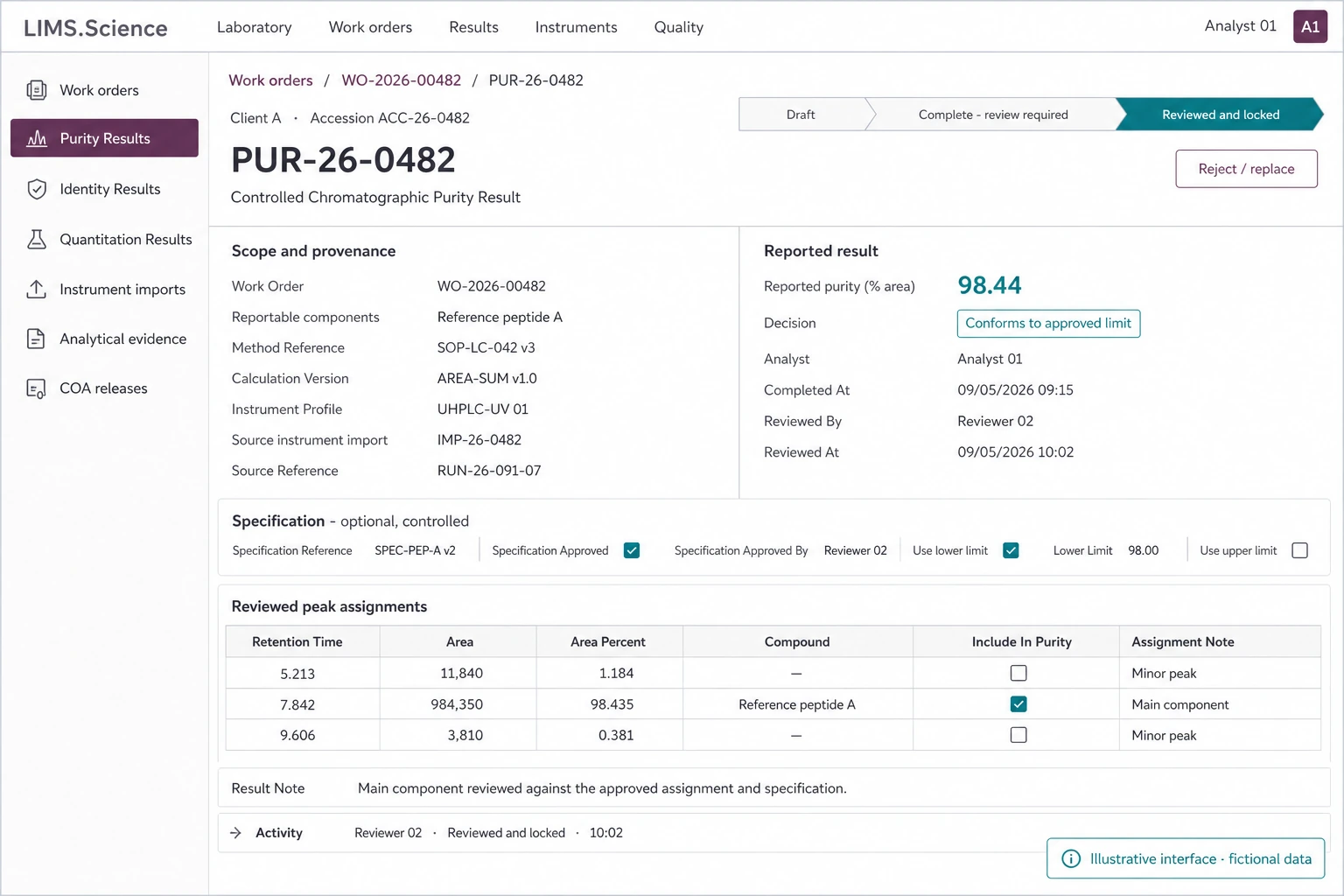 Chromatographic purity and reviewEnglish
 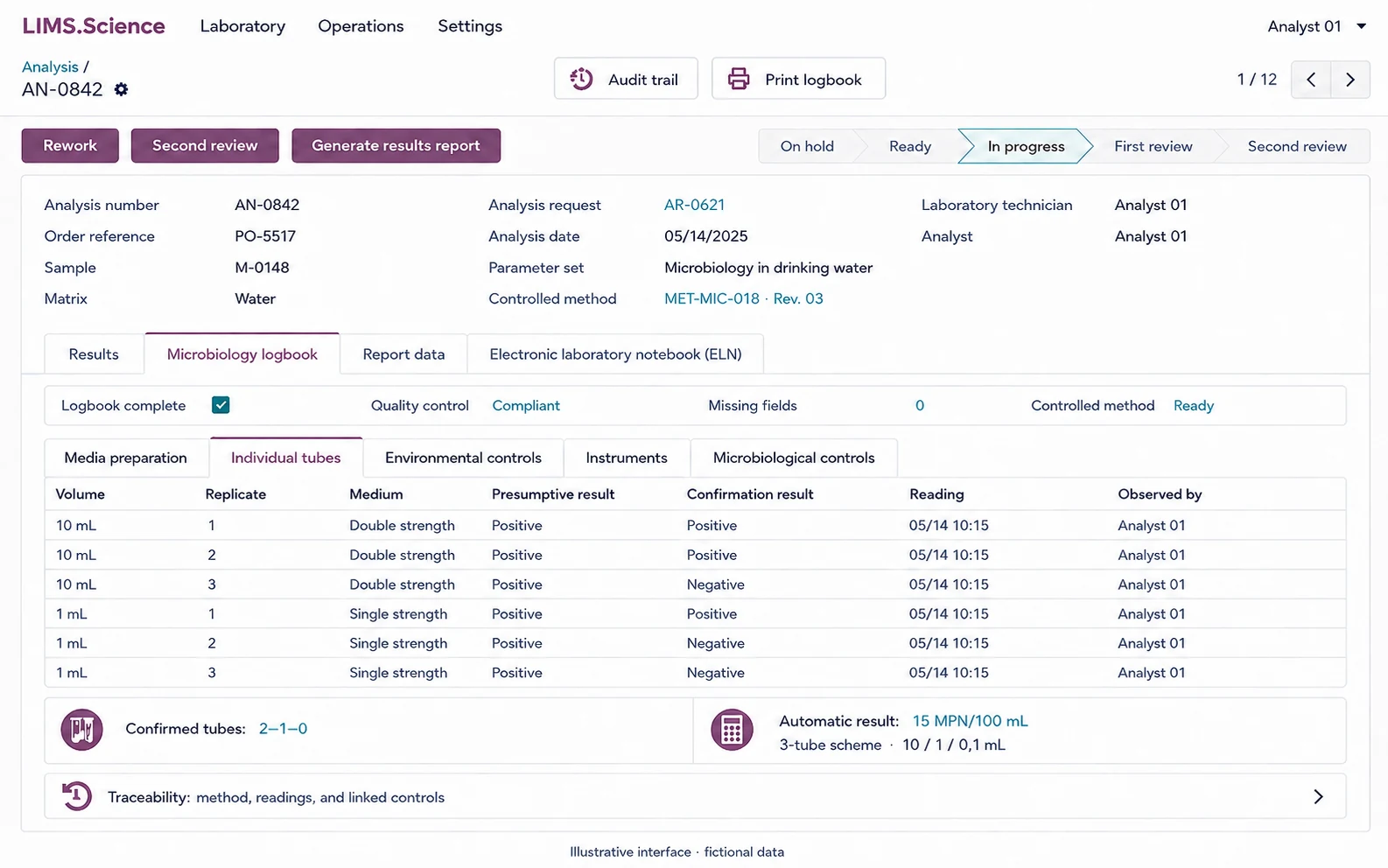 Microbiology electronic logbookEnglish
 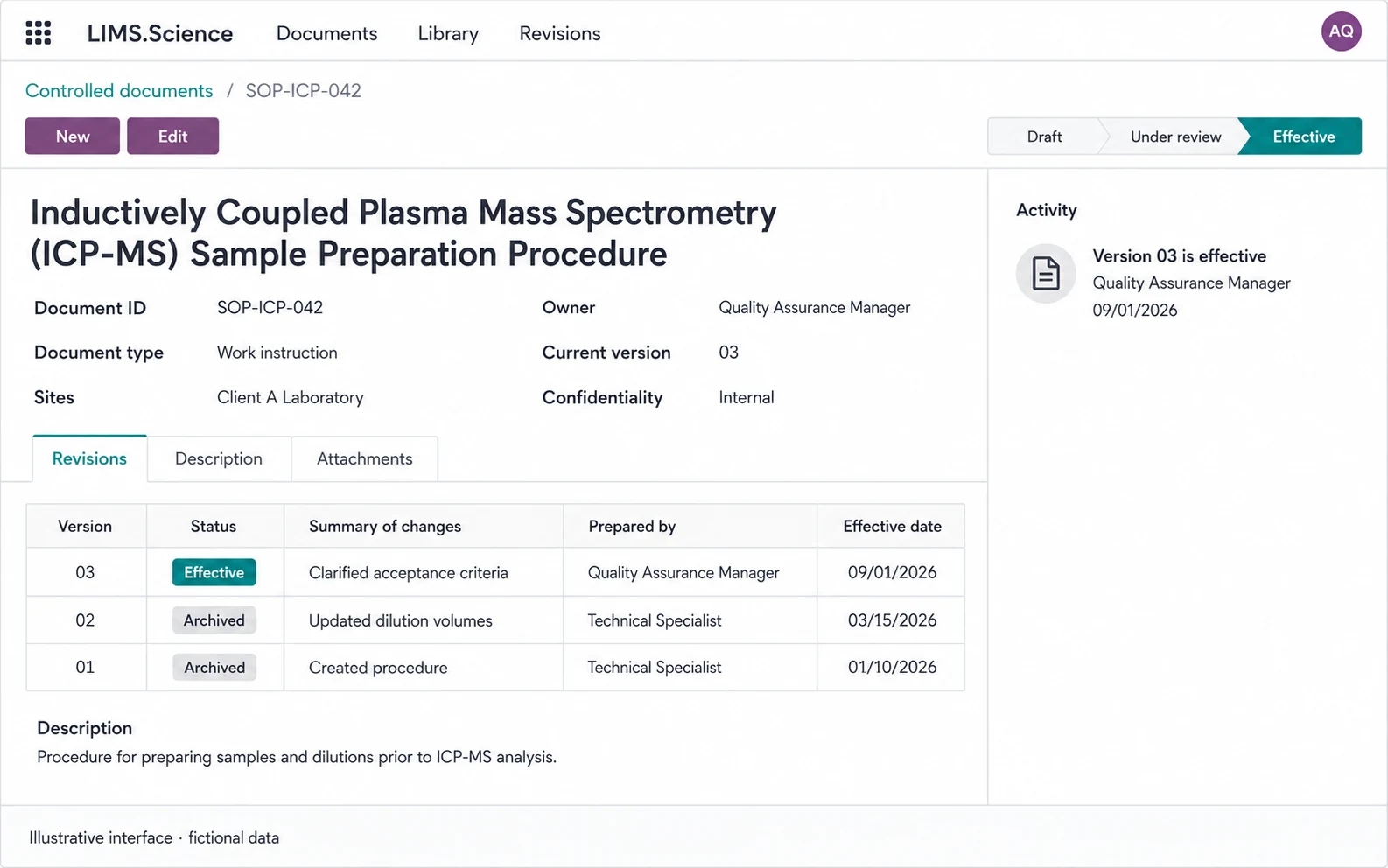 Controlled laboratory documentsEnglish
 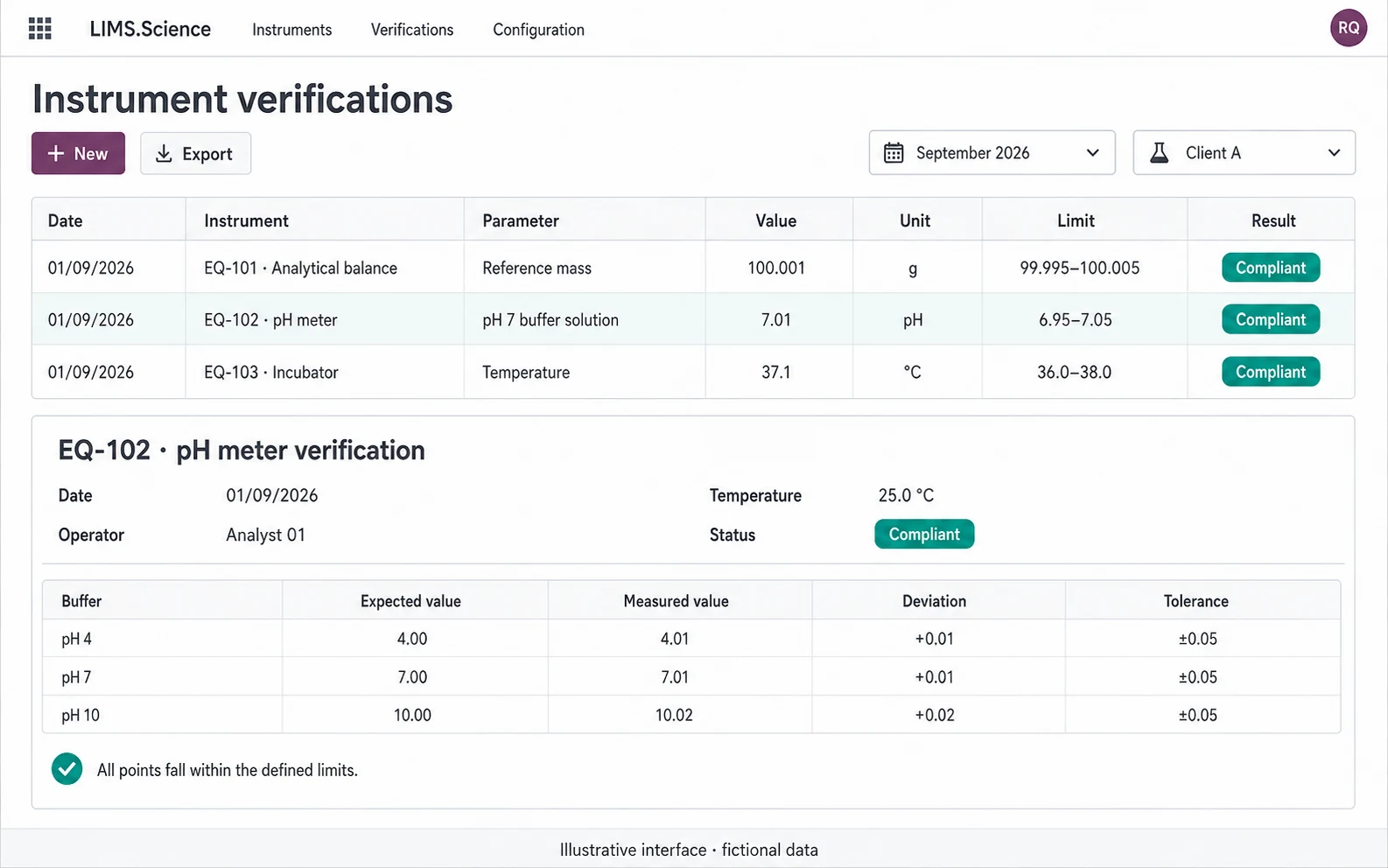 Quality control and metrologyEnglish
 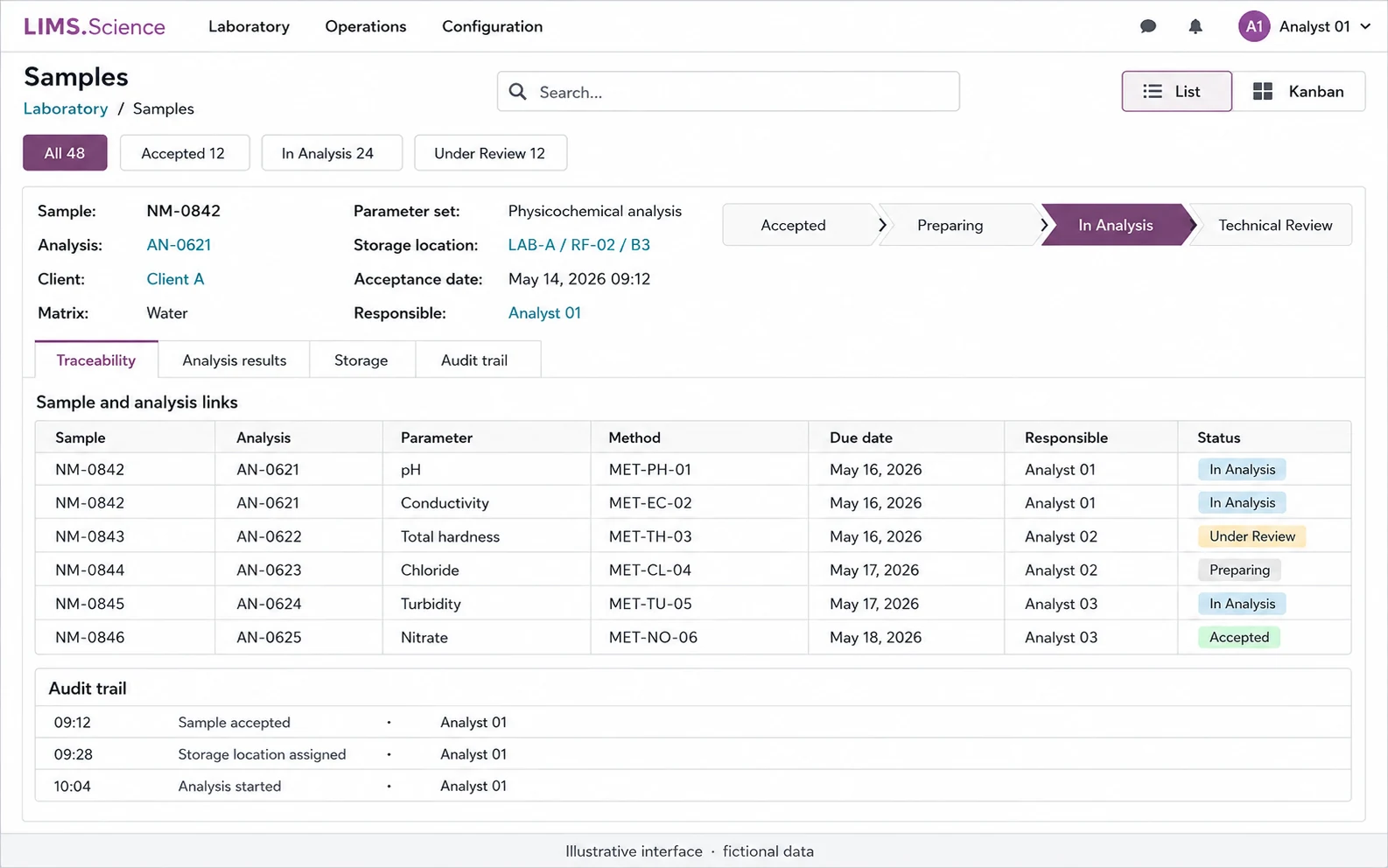 Sample traceability and operationsEnglish
 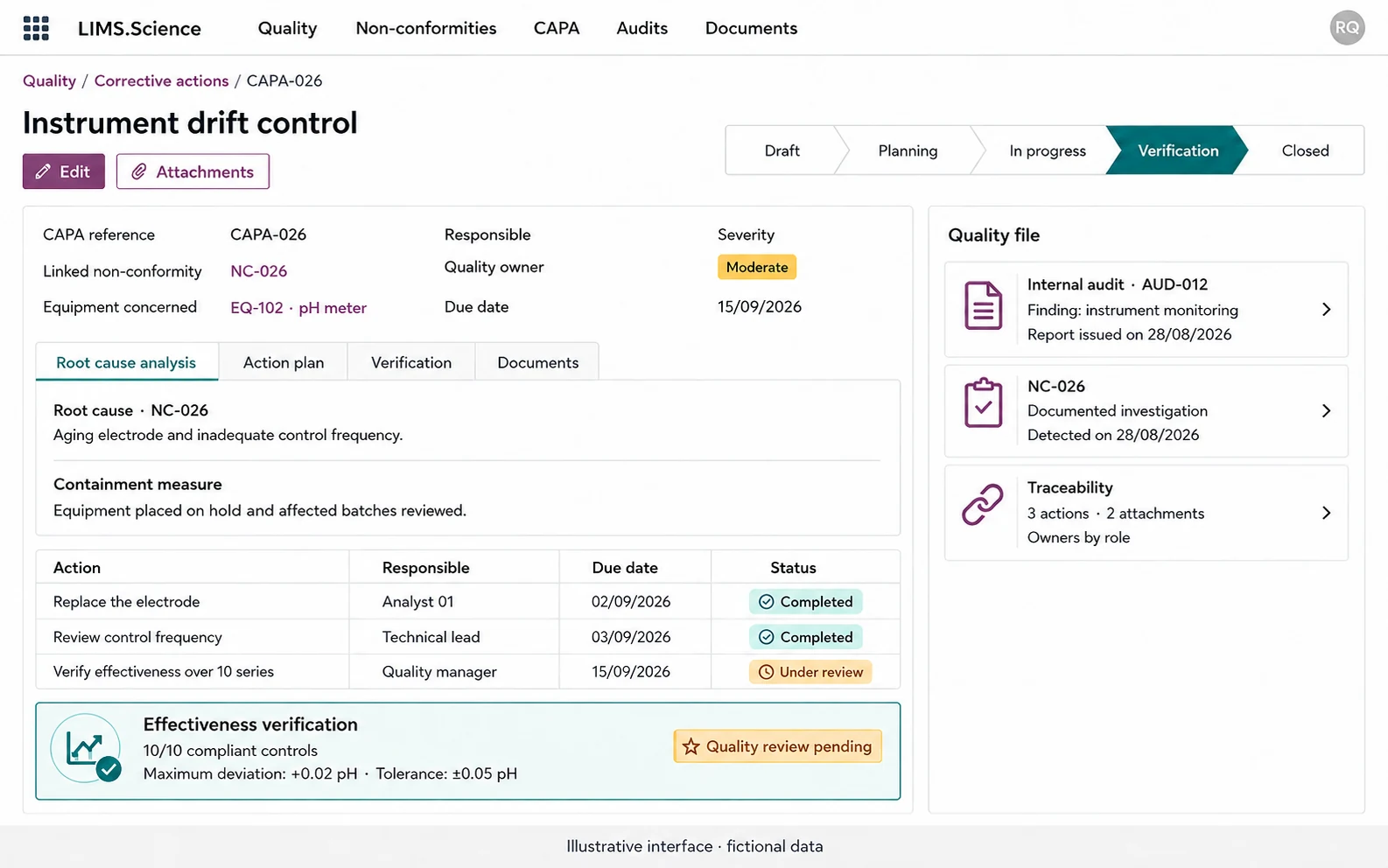 Laboratory quality managementEnglish
 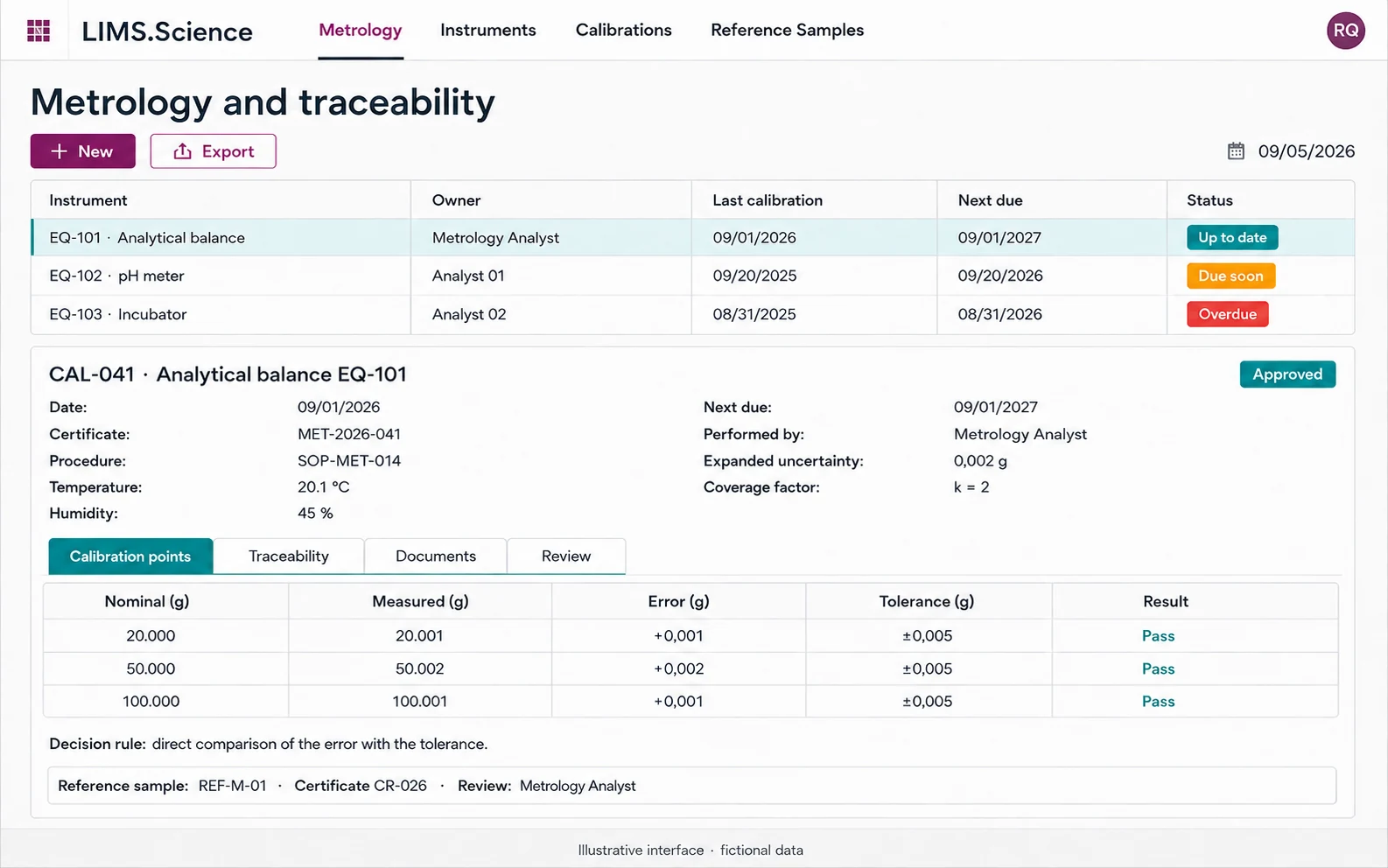 Instrument metrologyEnglish
 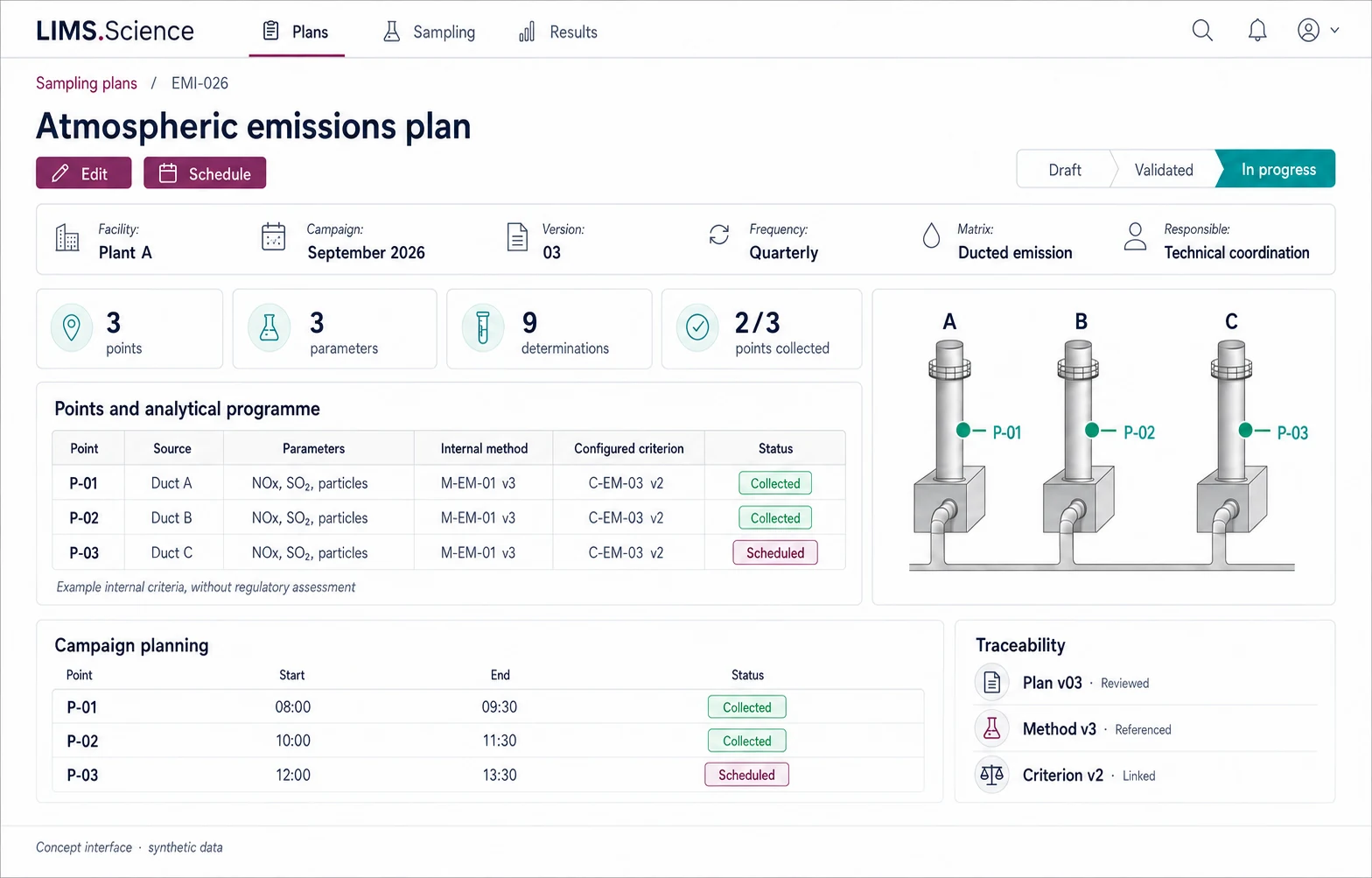 Emissions analysis plansEnglish
 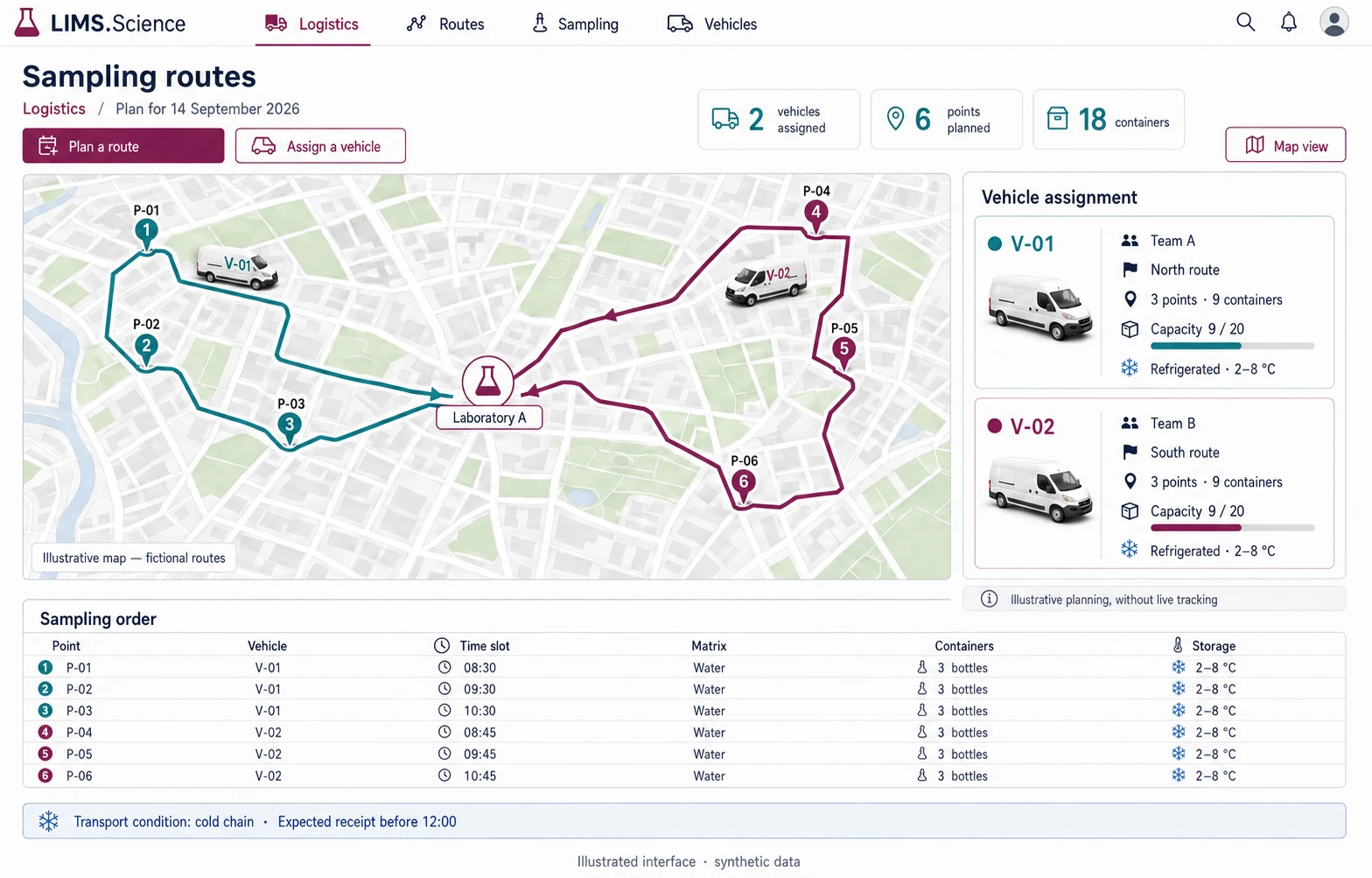 Field logistics and route planningEnglish
 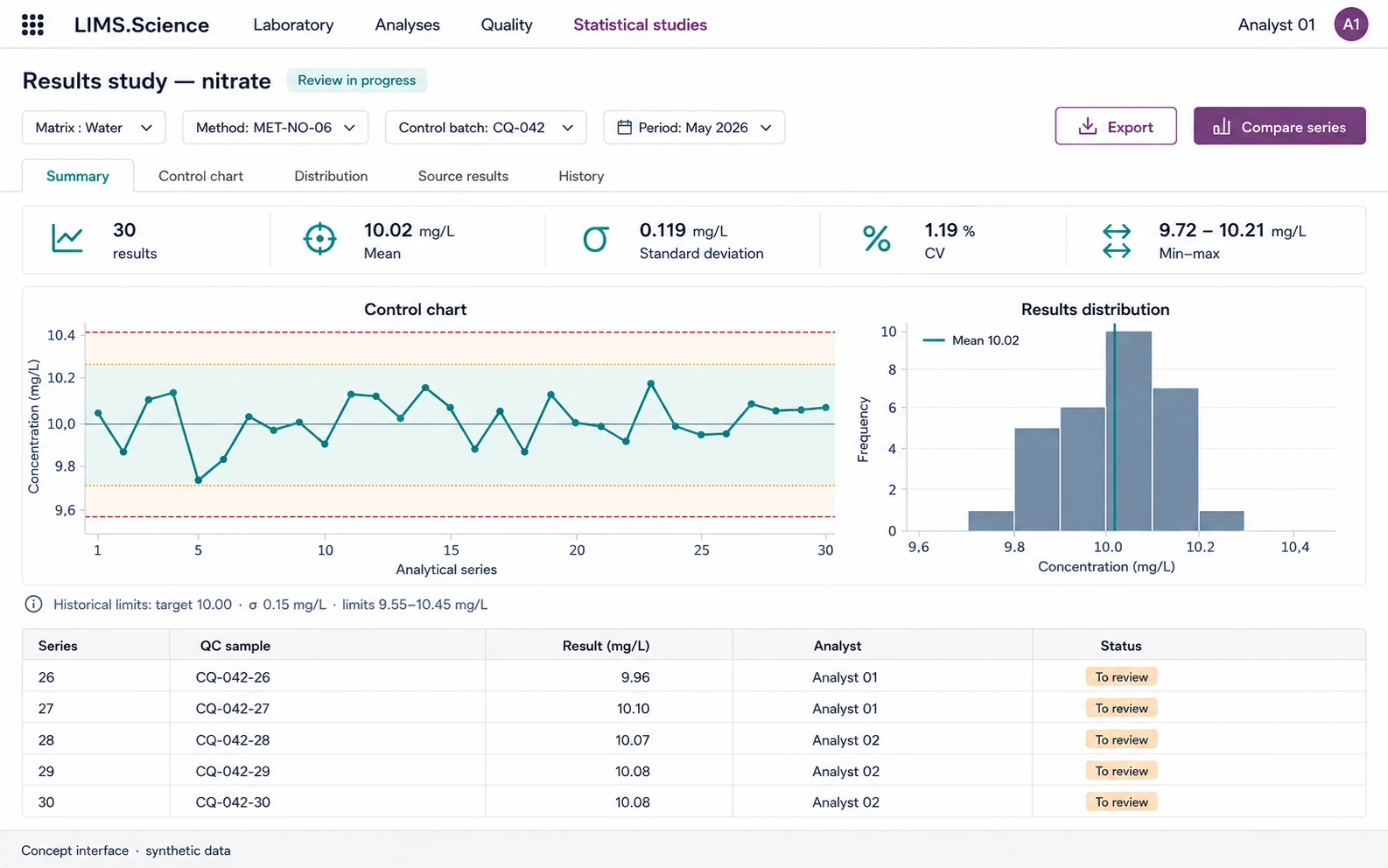 Statistical analysis and trendsEnglish
 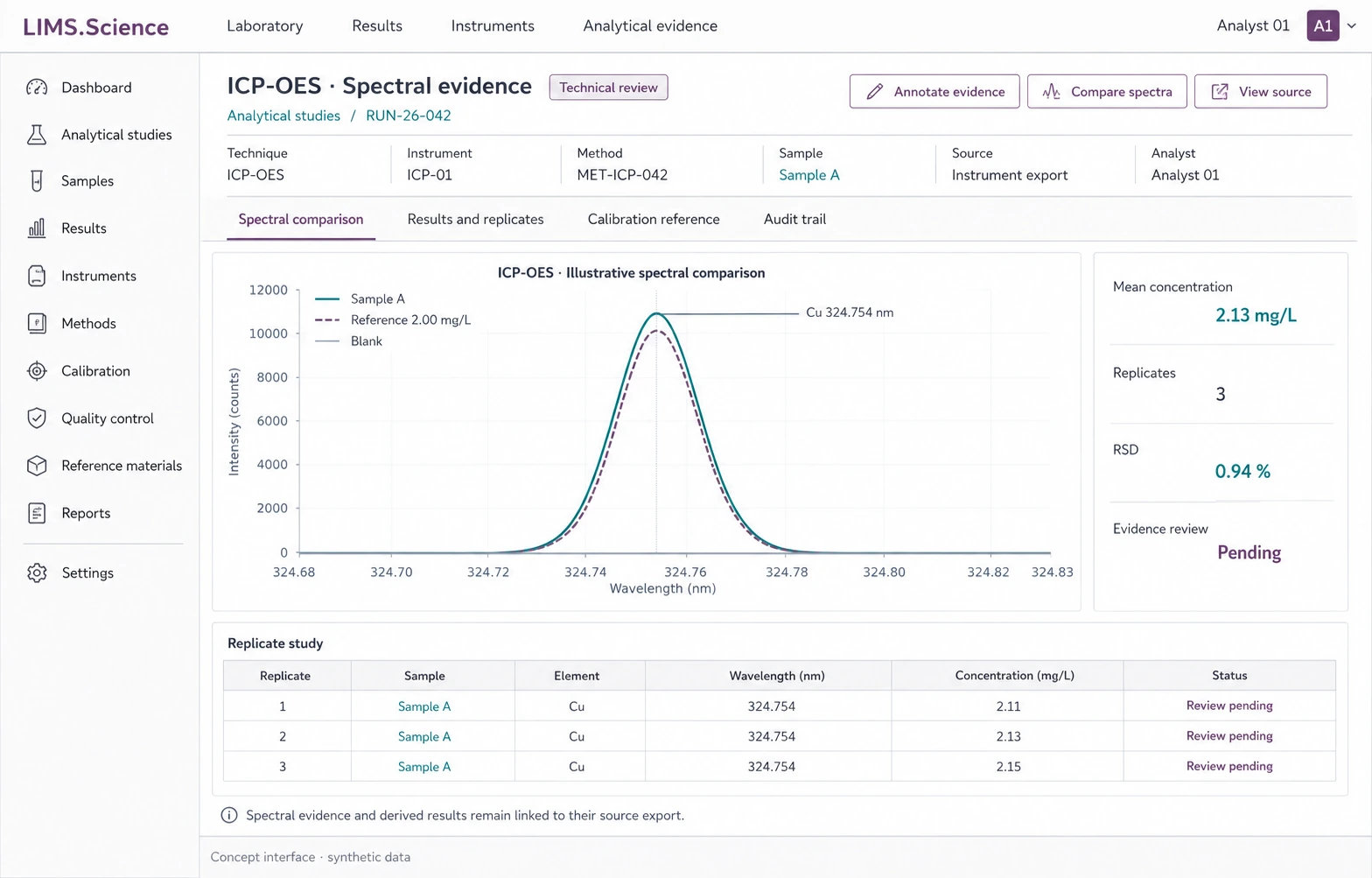 ICP-OES spectra and result reviewEnglish
 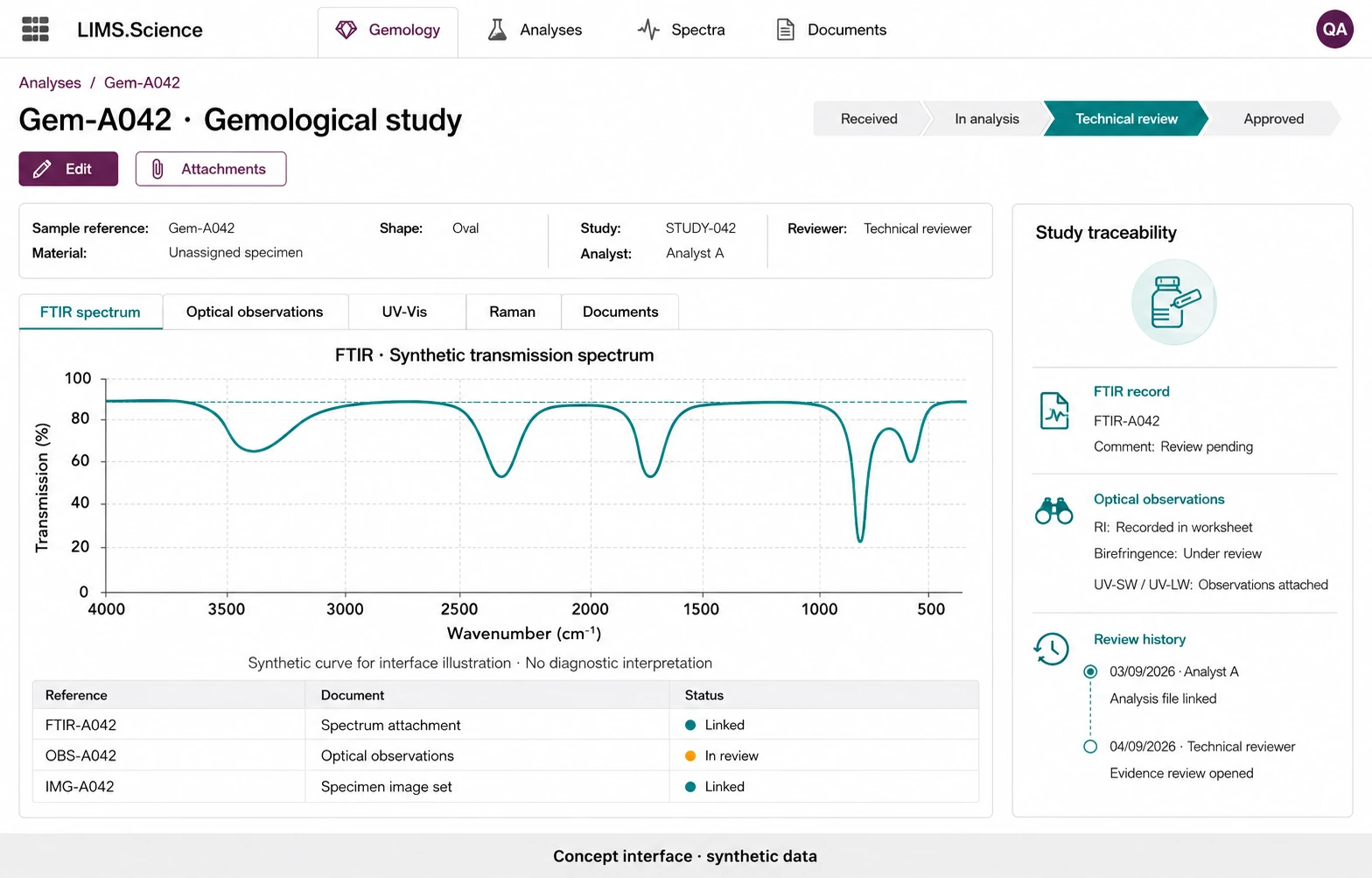 Gemmology and FTIR spectral reviewEnglish
 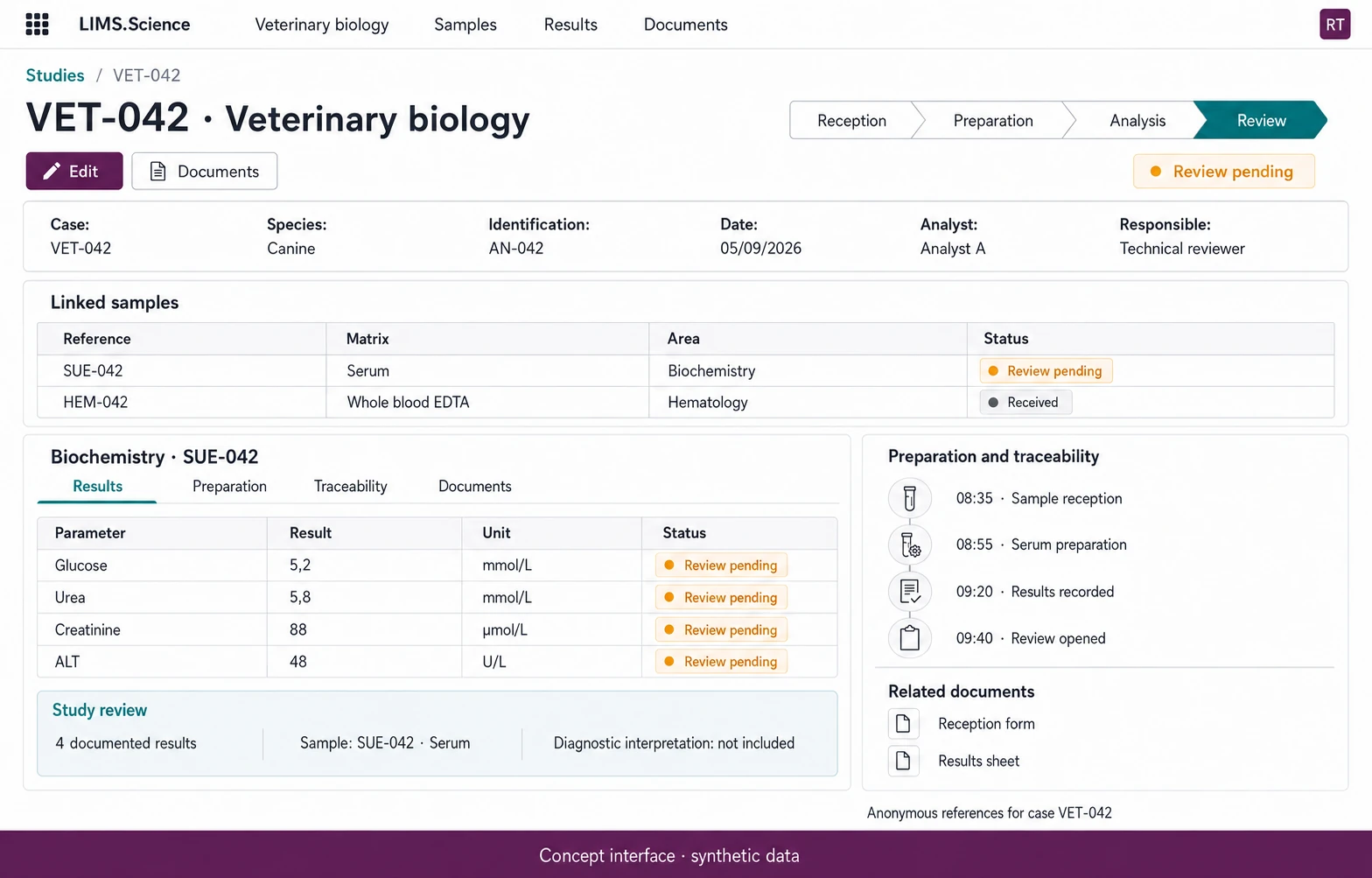 Veterinary biologyEnglish
 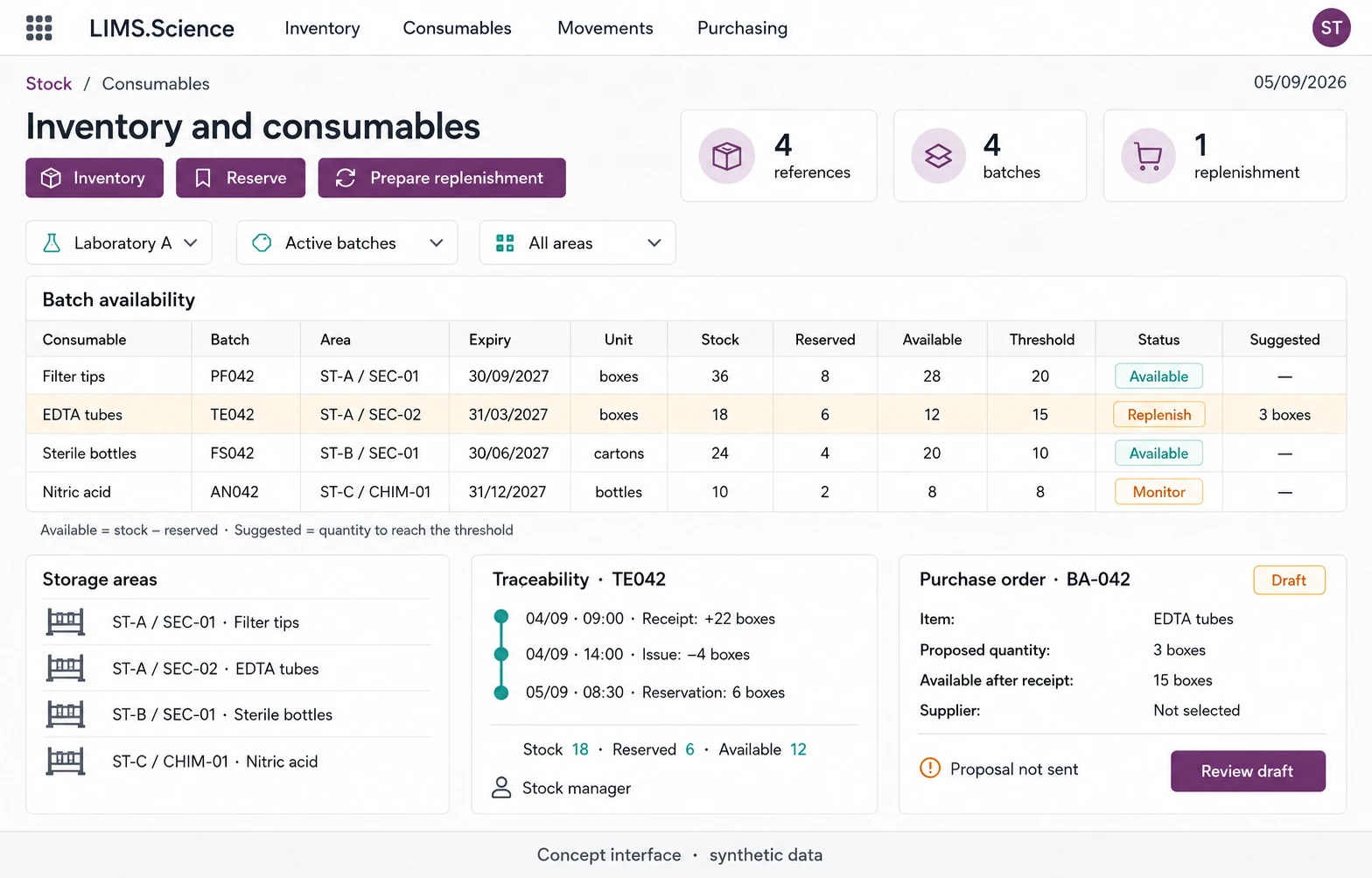 Inventory and consumablesEnglish
  Environmental campaign · spatial analysis
 Water quality · analytical batch review
 Stack emissions · corrected results
 Molecular biology · qPCR batch validation
 Microbiology · cultures and colony counts
 Geophysics · resistivity inversion
 Peptide analysis · annotated spectra
General examples shown for illustrative purposes.
What the platform does across laboratory operations.
Register samples, preserve custody, control states and know what must happen next.
Plan routes, field work, in-situ readings and controlled emissions-monitoring campaigns.
Apply calculations, specifications, statistics, control charts and technical review.
Connect supported equipment and govern calibration, maintenance and transfer exceptions.
Manage nonconformities, CAPA, audits, documents, training and change control.
Generate controlled, customer-specific reports and deliver authorised records securely.
Let governed agents monitor queues, prepare work and escalate exceptions for human decisions.
Manage approved emissions analysis plans from monitoring design through authorised report.
Supports controlled monitoring and evidence. Compliance depends on the applicable permit, jurisdiction, validated scope and laboratory procedures.
Agents can monitor deadlines, identify missing information, draft approved-data summaries and coordinate permitted actions. Authorised people retain every accountable decision.
Where the platform is applied. Each industry uses the same functional foundation with project-specific methods, terminology and controls.
Water, wastewater, soil, air, emissions and noise.
Ingredients, products, crops, feed, soil and production quality.
Rocks, drill cores, ores, concentrates, metals and materials.
Microbiology, genomics, biological samples and derived records.
Analytical chemistry, industrial QC, petrochemicals and material testing.
Coloured stone intake, testing, grading, certification and verification.
Instrument and system compatibility is confirmed by model, software version, firmware and interface during project assessment.
Configurable controls can support ISO/IEC 17025, applicable OECD and EU GLP, EU GMP Annex 11 and data-governance requirements. Compliance remains scope- and validation-dependent.
Bring your workflows, methods, systems and priorities. We will map the right configuration and delivery approach.
A governed LIMS foundation for reliable results, attributable records and inspection-ready evidence.
Methods, competence, equipment, metrological traceability, quality control and technical review.
Study plans, SOPs, raw data, deviations, QA evidence, reporting and archiving where GLP applies.
The system supports readiness; accreditation and compliance remain the laboratory’s responsibility.